



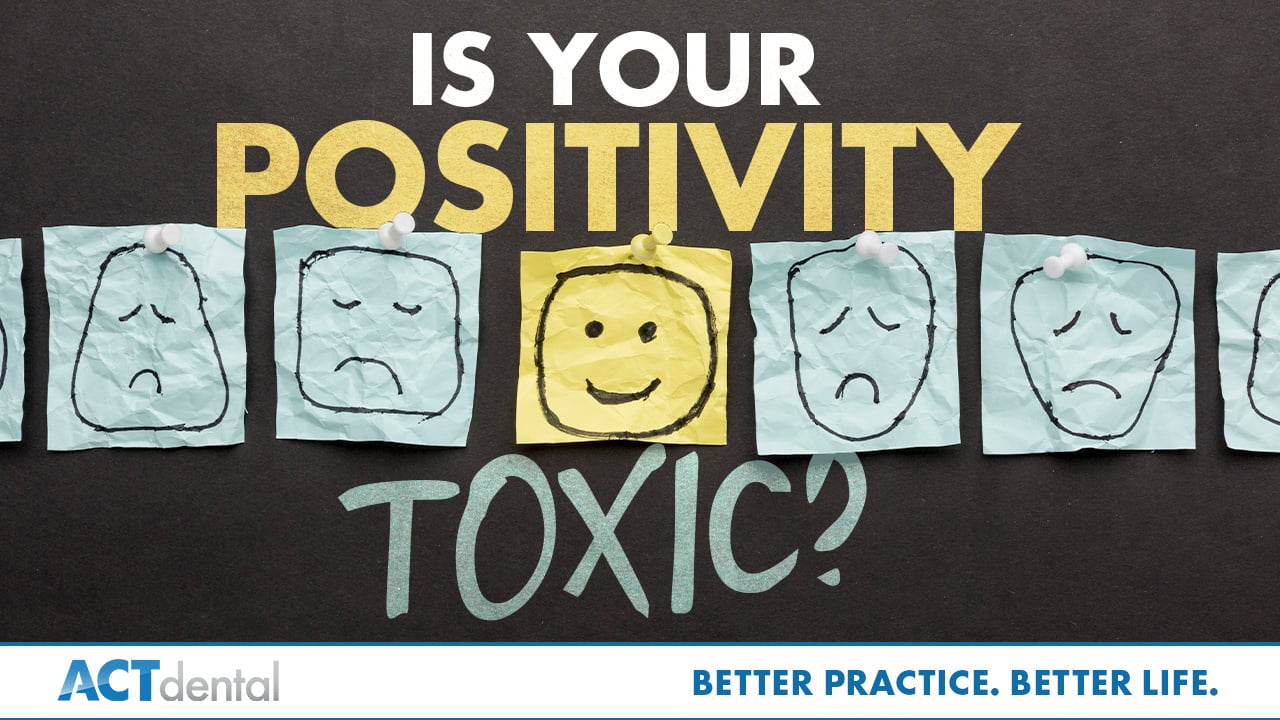
I’ve been a part of many practices that claimed they all got along and there wasn’t any conflict or friction. While this sounds great on paper, it’s indicative of an unhealthy practice. If you look deeper, these practice owners are often frustrated, dealing with repeated issues, and are unable to grow their business. The culprit is the artificial harmony that exists in the practice.
If this sounds familiar to you, you need to embrace the thing you’ve been avoiding: conflict! Productive conflict builds clarity, alignment, and trust, and learning to encourage it will transform your practice.
Find your place on the Conflict Continuum
Patrick Lencioni refers to conflict as a continuum: at one end is Artificial Harmony, and at the other, Personal Attacks. When you’re in Artificial Harmony, it seems healthy, but it’s a façade, because in reality, team members withhold their opinions to preserve comfort. Personal Attacks is more straightforward — conflict is emotional and unsafe. You want to exist in the middle, in a state of Productive Conflict. This is where you debate real issues, challenge ideas, and make strong decisions that have been stress-tested.
Artificial Harmony is Toxic Positivity
The problem with Artificial Harmony is that it feels calm on the surface with everyone being nice. However, being nice isn’t always nice, because that artificial positivity is actually toxic, and you’ll find problems under the surface:
- Team members agree for the sake of agreement, but aren’t truly bought in
- Team members remain silent in meetings when discussing KPIs or systems
- Everyone smiles in person, but complains in private
This toxic positivity will rise to the surface when underperformance isn’t addressed directly, standards drift, and team members avoid disagreement altogether.
Move toward Productive Conflict
There’s an inherent fear around conflict, but it doesn’t have to be a negative, confrontational thing. In fact, productive conflict should be the goal, because it’s a structured, respectful disagreement that focuses on the best outcome, not on being right. In a healthy practice, this looks like:
- Challenging ideas, not attacking people
- Using data to depersonalize hard conversations
- Normalizing debate in weekly meetings
- Reinforcing that conflict around ideas is a sign of engagement, not disloyalty
You’ll find that the more you encourage productive conflict, the more resilient your culture becomes.
Foster Productive Conflict as a Team
In order to build a culture that supports conflict, you must be intentional:
- First create a foundation of trust so the team knows one another and assumes positive intent
- Understand one another’s communication styles
- Understand one another’s backgrounds
Understanding truly is the key that will help you foster productive conflict, because it’s how you build trust and bridge the gaps between team members.
Remember, artificial harmony may seem positive, but it only protects comfort in the moment; over time it will damage your team’s trust and performance. Like Kirk says, “unresolved conflict always becomes a crisis.” Embracing productive conflict over toxic positivity isn’t a change you will make overnight, but you can get started on your journey right away! In your next team meeting, instead of letting your team stay silent and agree, invite disagreement and allow debate. Your reflex will be to stop the conflict, but let the conversation flow, and you’ll start seeing the impact it makes!
To learn more about ACT and how we can help you build a Better Practice and a Better Life, reach out to Gina!
Tune in next time and learn how making team agreements will foster alignment!

Miranda Beeson, MS, BSDH
Miranda Beeson, MS, BSDH, has over 25 years of clinical dental hygiene, front office, practice administration, and speaking experience. She is enthusiastic about communication and loves helping others find the power that words can bring to their patient interactions and practice dynamics. As a Lead Practice Coach, she is driven to create opportunities to find value in experiences and cultivate new approaches. Miranda graduated from Old Dominion University and enjoys spending time with her husband, Chuck, and her children, Trent, Mallory, and Cassidy. Family time is the best time and is often spent on a golf course, a volleyball court, or spending the day boating at the beach.
RECENT POSTS
How Do I Turn My Core Values into Tools?
September 11, 2026
How Do I Build a Stronger Team?
August 28, 2026
How Can I Make My Practice Stand Out?
August 14, 2026
How Do I Stop Turnover?
July 29, 2026
The Question is the Answer!
July 27, 2026
Data Snapshot: Unscheduled Active Patients
July 24, 2026
Twin Creeks Family Dentistry
July 20, 2026
Make the Shift to Successful Ownership
July 17, 2026
Why Communication Breaks Down in Dental Practices
July 13, 2026
Data Snapshot: Fluoride Percentage
July 10, 2026